
Built on 9.5 years inside one of the largest behavioral health organizations in the country scaling organic traffic and connecting patients with care.
Years in the industry
Annual ORGANIC SEssions
Patients connected
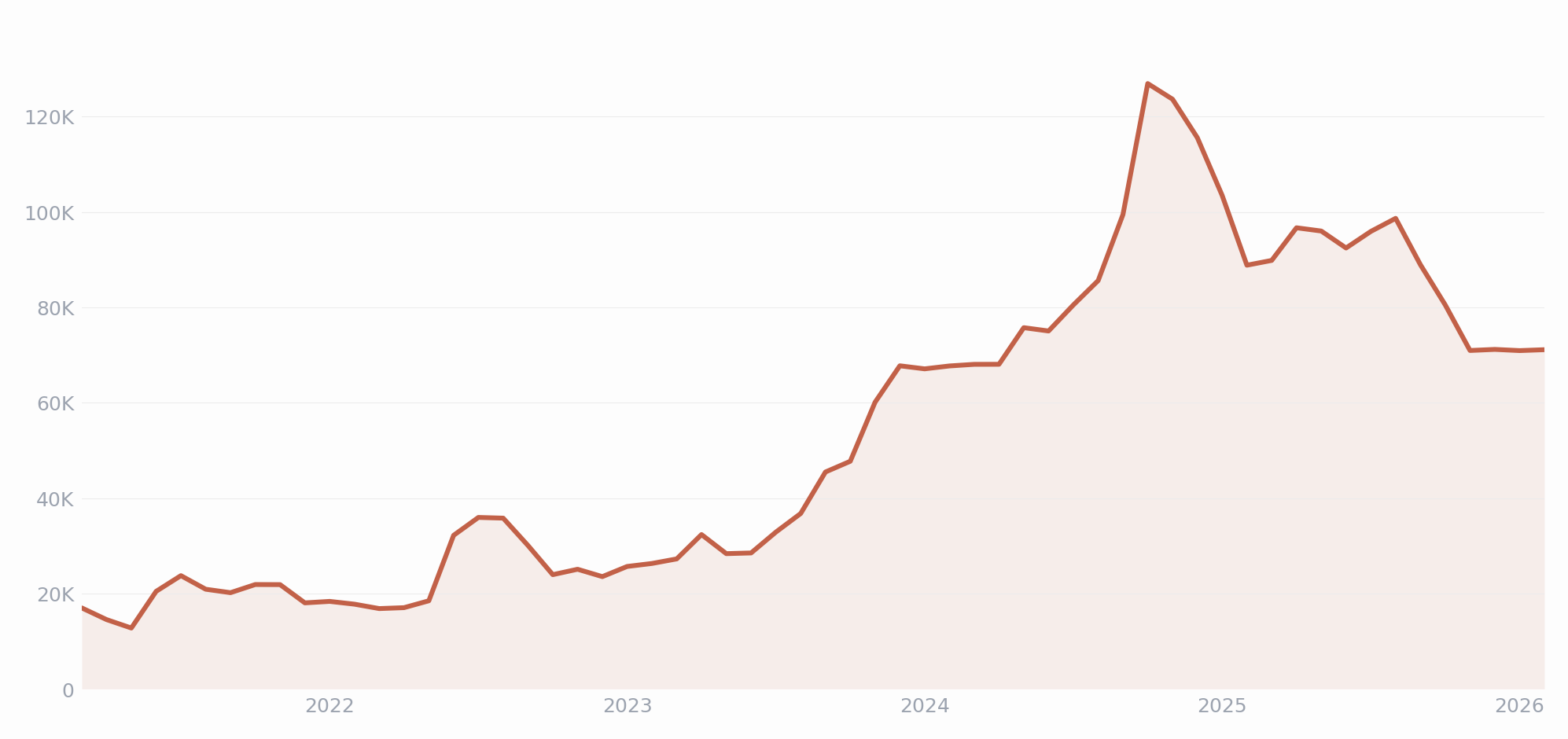
Behavioral health SEO is built on understanding how patients, families, and referral sources actually search for care and what makes them pick up the phone. That understanding comes from 9.5 years operating inside one of the largest behavioral health organizations in the country, scaling organic traffic to over 60 million annual sessions across 14+ treatment facilities and contributing to connecting more than 50,000 patients with care.
If you run a behavioral health organization, addiction treatment center, or mental health practice, the approach here is grounded in what actually drives admissions, not what looks good in a pitch deck.
Why Behavioral Health SEO Requires a Different Approach
Behavioral health falls under Google’s YMYL (Your Money or Your Life) classification. That means the content on your website is held to a higher standard than most industries. Google’s quality raters evaluate behavioral health sites for Experience, Expertise, Authoritativeness, and Trustworthiness (EEAT), and sites that fall short get filtered out of results regardless of how well they are technically optimized.
But the differences go beyond how Google evaluates your site. The way people search for behavioral health services is fundamentally unlike other healthcare verticals.
Patients search during moments of crisis. Families search on behalf of loved ones who may not be searching for themselves. People research symptoms for weeks or months before they ever look for a provider. Insurance and cost questions drive a significant share of traffic that most providers ignore entirely.
On top of that, behavioral health marketing operates within compliance constraints, serves multiple distinct audiences simultaneously, and competes in one of the most expensive paid search environments in any industry.
Generic SEO strategies are not built for this. Behavioral health SEO requires someone who understands the clinical landscape, the patient journey, and the business model behind admissions.
How People Search for Behavioral Health Services
Understanding search behavior in behavioral health is the foundation of any effective SEO strategy. The intent behind a search dictates everything: the content that should exist on your site, how pages should be structured, and what conversion path makes sense.
What Behavioral Health SEO Strategy Looks Like
Keyword Strategy by Intent and Level of Care
Not all keywords are worth targeting. In behavioral health, keyword strategy needs to account for clinical intent, level of care, geographic relevance, and where the searcher sits in the decision process.
A residential treatment center draws patients from a different radius than an outpatient program. Detox keywords carry different conversion behavior than therapy keywords. Branded traffic behaves differently than non-branded traffic. The providers who grow are the ones targeting non-branded, high-intent terms aligned to the services they actually offer, not chasing volume for its own sake.
Site Architecture
Site architecture is one of the most challenging and most overlooked aspects of behavioral health SEO. A treatment center’s website needs to organize content across conditions, treatments, levels of care, locations, and insurance, and all of these categories overlap.
Getting this structure right determines whether Google can crawl, understand, and rank your content at scale. It also determines whether patients can find what they need without getting lost. For multi-location organizations or providers going through mergers and acquisitions, this becomes even more critical.
Content Strategy
Content in behavioral health has to do more than rank. It has to be clinically accurate, empathetic in tone, and aligned to how patients and families actually think about their situation.
Service pages covering conditions, treatments, and levels of care are the foundation. Educational content that maps to the patient journey builds topical authority over time. Clinical author attribution strengthens EEAT signals. And a consistent publishing cadence tells Google your site is active and authoritative.
The goal is content that earns trust with both search engines and the people who land on your pages.
Local SEO
For programs that serve a defined geographic area, local SEO is a primary growth lever. This includes Google Business Profile optimization, location pages with genuinely unique content, review acquisition strategies appropriate for a sensitive industry, citation consistency, and local link building from healthcare organizations and community partners.
The specifics of a local SEO strategy should reflect the type of care being offered. An IOP program serving a single metro area has different local SEO needs than a residential facility drawing from an entire region.
Technical SEO
Technical SEO is the foundation everything else sits on. If your site is slow, difficult to crawl, or poorly structured, no amount of content or link building will compensate.
In behavioral health, this means mobile performance matters more than in most industries because crisis searches happen on phones. Schema markup for healthcare providers helps Google understand your organization. Core Web Vitals are a baseline requirement. And for multi-location providers, how the site is structured technically (subfolders, subdomains, or separate domains) has direct implications for how authority flows across the organization.
SEO and Paid Media in Behavioral Health
Behavioral health has some of the highest cost-per-click rates in any industry. Addiction treatment keywords regularly exceed $100 per click. Many providers have built their entire patient acquisition model around paid search and third-party lead aggregators, which means they are renting their traffic instead of owning it.
SEO does not replace paid media. Both have a role. But organic search is a compounding asset. The content you publish and the authority you build continue to drive traffic and admissions over time without resetting to zero each month. Paid search is a faucet you turn on and off. SEO is infrastructure.
The strongest behavioral health marketing strategies use paid for immediate visibility while building organic as the long-term growth engine. Over time, this shifts the cost per admission down as organic takes on a larger share of total volume.
Common Behavioral Health SEO Mistakes
After nearly a decade in the industry, the same patterns show up consistently among providers struggling with organic growth.
- Over-reliance on directories and lead gen. Third-party lead sources can fill census in the short term, but they are not a substitute for building your own organic presence. When you stop paying, the leads stop.
- Thin location pages. Swapping city names on a template and calling it a location page does not work. Google recognizes low-value content, and so do patients.
- Ignoring non-branded search. Most behavioral health providers get the majority of their organic traffic from people searching their brand name. The real growth opportunity is in non-branded search: the patients who do not know you yet but are actively looking for the services you provide.
- No clinical attribution on content. Publishing health content without named, credentialed authors undermines your EEAT signals. Google wants to see who wrote the content and why they are qualified.
- Losing traffic during M&A. Mergers, acquisitions, and rebrands are common in behavioral health. Without proper SEO planning, domain migrations and site consolidations can destroy years of organic equity overnight.
- Not preparing for AI search. Google AI Overviews, ChatGPT, and Claude are already changing how people find behavioral health information. Providers who are not structuring content for AI visibility now are going to lose ground to those who are.
AI Search and LLM Visibility
How people find behavioral health providers is changing. Google AI Overviews are appearing for more healthcare queries. Patients are using ChatGPT and Claude to research symptoms, compare treatment options, and evaluate providers. Gemini is particularly worth watching because it is grounded directly in Google Search data, meaning your traditional SEO performance directly influences whether your content gets surfaced in AI-generated results.
Being ranked on page one is no longer the only goal. Your content also needs to be structured in a way that AI systems can parse, reference, and cite. This means clear topical authority across your service lines, consistent clinical language, proper schema markup, and content organized around entities and relationships rather than just keywords.
The providers who invest in this now will have a significant advantage as AI-driven search continues to take share from traditional results. The ones who wait will be playing catch-up.
Who This Is For
I work with behavioral health providers who take organic search seriously as a growth channel.
That includes addiction treatment centers (single-location and multi-facility), outpatient mental health practices looking to grow beyond referrals, behavioral health organizations scaling through acquisition, and marketing teams that need a strategic partner who understands the operational side of the business.
Whether you are building from scratch or trying to fix what a previous agency got wrong, the starting point is the same: a clear-eyed look at where you are, where the opportunity is, and what it takes to get there.
Frequently Asked Questions
What is behavioral health SEO?
Behavioral health SEO is the process of optimizing a treatment center’s or mental health provider’s website to rank higher in search results for terms related to their services. It involves keyword research, content strategy, technical optimization, local SEO, and link building, all applied within the specific context of behavioral health where clinical accuracy, EEAT compliance, and patient trust are essential.
How long does it take to see results?
Most providers see early improvements in rankings and traffic within 3 to 6 months. Larger gains in non-branded traffic and measurable admissions impact typically develop over 6 to 12 months. The timeline depends on your current site health, competitive landscape, and how aggressively you invest in content and optimization.
Why can’t a general SEO agency handle behavioral health?
They can try. But behavioral health has unique search patterns, strict YMYL standards, complex site architecture requirements, and a patient journey that does not look like other industries. Agencies that lack direct experience in the space consistently miss the nuances that determine whether SEO translates to actual admissions.
How does behavioral health SEO compare to paid search?
Paid search provides immediate visibility but stops working when the budget stops. SEO builds over time and creates a compounding return. In behavioral health, where CPCs regularly exceed $100 per click, organic search is one of the most cost-effective ways to reduce your overall cost per admission.
Does local SEO matter for treatment centers?
Yes. For outpatient, IOP, and PHP programs, local SEO is one of the most important growth levers. For residential and detox programs that draw from broader geographies, local SEO still plays a role but is paired with regional and national keyword strategies.
How do you approach SEO for multi-location behavioral health organizations?
Multi-location SEO requires a scalable site architecture, unique location-specific content, consistent local presence management across all facilities, and a technical structure that allows authority to flow across the organization. For providers growing through acquisition, SEO planning during the transition is critical to avoid losing existing organic traffic.
How do you approach SEO for multi-location behavioral health organizations?
Multi-location SEO requires a scalable site architecture, unique location-specific content, consistent local presence management across all facilities, and a technical structure that allows authority to flow across the organization. For providers growing through acquisition, SEO planning during the transition is critical to avoid losing existing organic traffic.
What does behavioral health SEO cost?
Pricing depends on the scope of work, number of locations, competitive landscape, and content needs. A meaningful engagement typically ranges from $3,000 to $10,000 per month. The better question is return on investment. A single admission driven by organic search can represent significant lifetime revenue, making SEO one of the highest-ROI channels available to behavioral health providers.
Let’s Talk About Your SEO
If you are a behavioral health provider who wants organic search to be a real growth channel, not a line item that never delivers, I would like to hear about what you are working on.